

How to Get Healthy and Put It on Autopilot
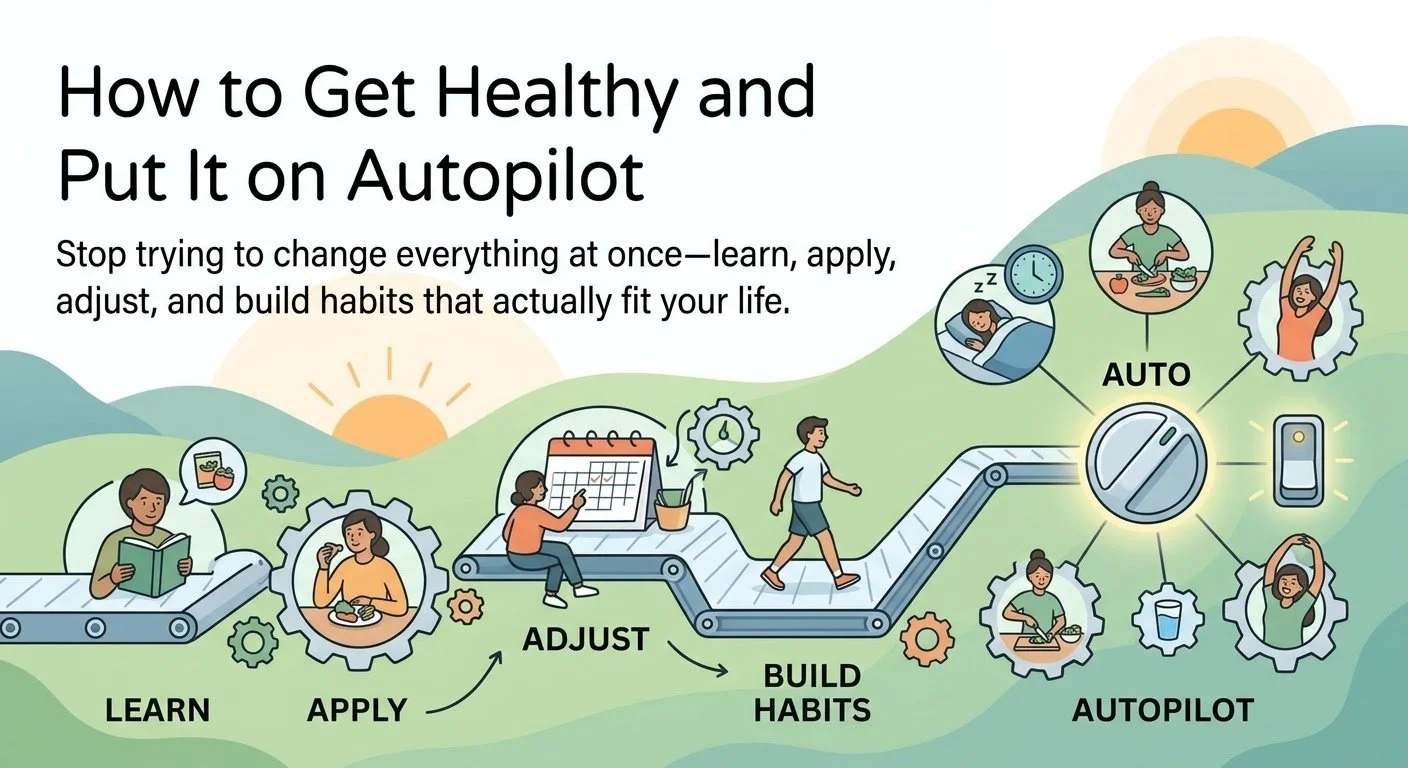
If you’re trying to improve your overall health, one of the hardest parts can simply be figuring out where to start.
There’s so much information out there about food, exercise, sleep, calories, protein, supplements, fasting, meal prep and everything else that it can become overwhelming before you even begin.
You don’t need to change everything at once.
The goal is to learn something, apply it, see what happens, and then add something new.
Find Someone You Can Relate To
One of the easiest ways to learn is to find someone on YouTube or another platform who you can actually relate to.
Not someone who has been a professional athlete for 20 years or someone whose entire life revolves around fitness if that’s not your reality.
Find someone whose lifestyle, starting point or goals look somewhat like yours.
Learn from them, but don’t just watch video after video after video.
Learn the information and immediately apply something from it.
Then learn something else.
Otherwise, you can spend six months watching fitness and nutrition content without actually changing anything.
And don’t be afraid to learn from multiple people. You may find one person who explains nutrition really well, another who makes exercise easy to understand, and another whose cooking style works for your household.
Take what applies to you and leave the rest.
Start With Food
Pick 5–7 meals you already enjoy and make better versions of them.
You don’t have to suddenly eat foods you don’t like. If you like tacos, burgers, breakfast foods, rice bowls, pasta, etc., figure out how to make those meals work better for you.
A few simple rules:
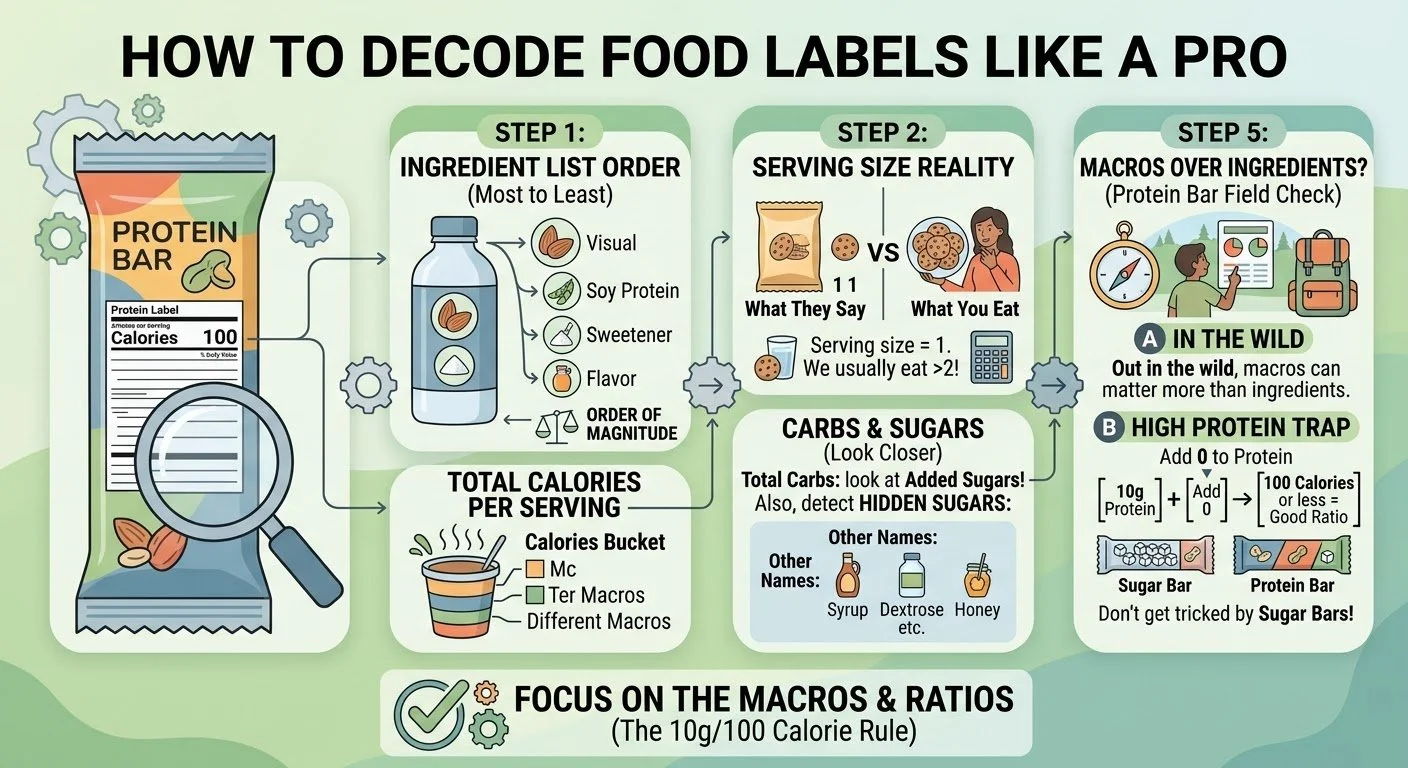
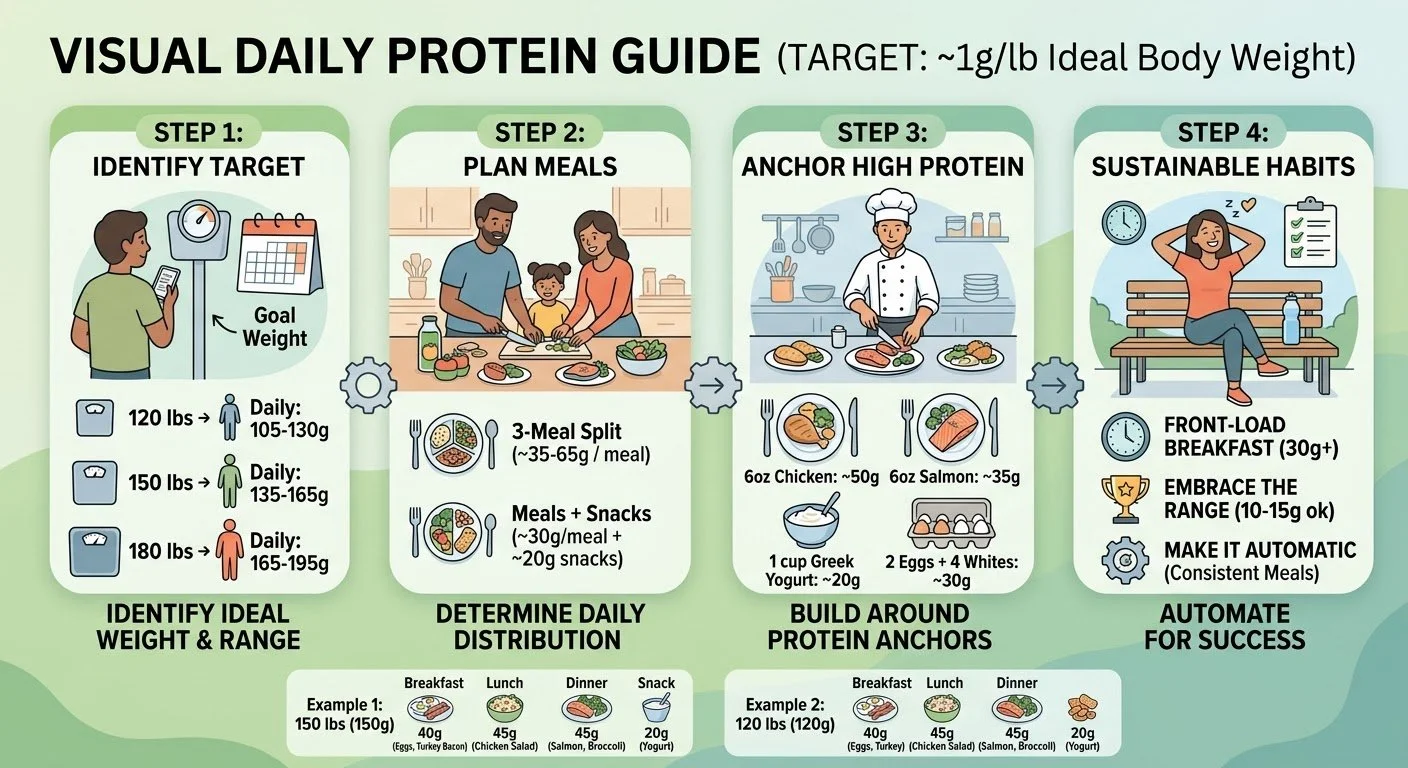
Have a good source of protein with every meal. Most people eat much less protein than they think they do. Chicken breast, boneless skinless chicken thighs, ground turkey, ground chicken, 93/7 ground beef, eggs, Greek yogurt, tuna, salmon and other seafood are all good options.
Choose leaner cuts of meat most of the time. Save the fattier cuts for meals you really enjoy.
Don’t be afraid to season your food. If you don’t like vegetables, season them like you would your meat. Sometimes it’s not the vegetable you dislike; it’s how it was prepared.
Potatoes and rice can absolutely fit into a healthy diet. Pay attention to portions instead of automatically labeling them “bad.”
Keep pasta more limited if you’re trying to reduce calories, or experiment with alternatives like spaghetti squash.
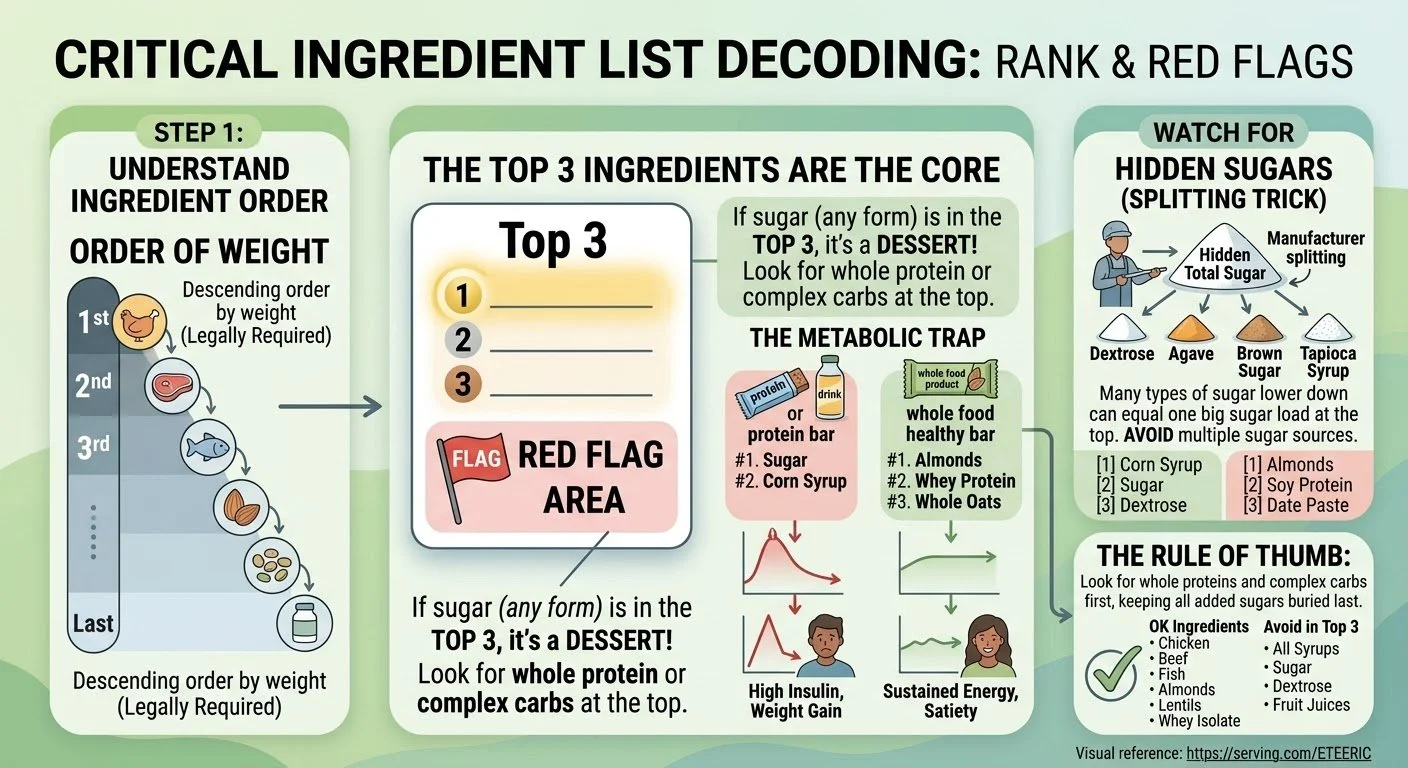
Pay attention to sauces, dressings and condiments. Those calories can add up quickly.
Don’t forget about drinks. Calories you drink are often much easier to overlook than calories you eat.
Understand Calories
This is one of the most important concepts to understand.
Calorie deficit: You’re eating fewer calories than your body is using. Over time, this generally leads to weight loss.
Maintenance: You’re eating around the same number of calories your body is using. Your weight generally stays around the same.
Calorie surplus: You’re eating more calories than your body is using. Over time, this generally leads to weight gain.
That’s the basic framework.
You can eat nutritious foods and still consume more calories than your body needs. You can also eat foods you enjoy and still lose weight if you’re consistently in a calorie deficit.
Understanding that makes a lot of the other nutrition information easier to put into perspective.
Track for 30 Days
I strongly recommend tracking everything you eat and drink for about 30 days.
I use the free version of the MyNetDiary app, but there are plenty of other food-tracking apps that work.
You don’t necessarily have to track forever.
The purpose is to collect data.
You may discover you’re eating more calories than you thought. You may discover you’re eating much less protein than you thought. You may discover that the handful of snacks, sauces, drinks and little bites throughout the day add up to much more than you realized.
It’s surprisingly easy to get to 3,000–4,000 calories in a day without feeling like you ate that much.
Once you know what you’re actually doing, you can make informed changes instead of guessing.
Don’t Forget Sleep and Movement
None of this works very well long term if you’re consistently getting poor-quality sleep and barely moving during the day.
You don’t need an arbitrary 10,000-step goal.
I’ve intentionally made my own bare minimum 5,000 steps per day. That’s my floor, not necessarily my target.
Start wherever you are and build from there.
Use a treadmill at home or at the gym. Walk around your neighborhood. Go to a nearby school and use the track, football field or bleachers. Walk. Jog. Run. Whatever makes sense for your current fitness level.
Start slow and add more as your stamina and endurance improve.
The important part is consistent daily movement.
Strength Train
You don’t need to spend two hours in the gym.
A good starting point is strength training 2–3 days per week for 30–60 minutes.
And if 30 minutes sounds like too much, start with 15 minutes.
Bodyweight exercises and stretching can still make a difference.
You can also experiment with what type of workout you actually enjoy.
Do you prefer full-body workouts?
Maybe you prefer upper body one day and lower body another day.
Try morning workouts. Try afternoons. Try evenings.
Figure out what fits your actual lifestyle.
I personally prefer early morning because once it’s done, it’s done. Whatever happens with the rest of the day, my workout isn’t getting skipped.
That’s not necessarily the right answer for everyone.
Find your right answer.
Be Consistent, Not Perfect
This might be one of the most important things in the entire process.
Show up on the days you picked.
Some days you’re going to have a great workout.
Some days you’re going to have a half-assed workout.
Both count.
The goal isn’t to be perfect every day. The goal is to keep showing up.
If Monday, Wednesday and Friday are your workout days, make those your workout days.
Even if Monday’s workout is amazing, Wednesday’s is mediocre and Friday’s is only 15 minutes.
You’re building the habit of showing up.
That’s much more valuable long term than going all-out for three weeks and then disappearing for three months.
Your Household May Be Part of the Challenge
This is something that doesn’t get talked about enough.
If you live with a spouse, partner, kids or other family members, you may not all be ready to eat the same way at the same time.
Depending on your household, you may have to make two different meals in the beginning — or indefinitely.
If your spouse or kids are older, you may literally have to prepare your own meals and let everyone else do their own thing.
And that’s okay.
You’re not being selfish by putting yourself first and finding your own path.
You’re actually leading by example.
When people see you stick with something, get results and maintain those results, they may eventually become interested themselves.
But you can’t force someone else to be ready just because you’re ready.
Anytime you’re cooking for more than yourself, there’s usually some kind of tradeoff. Especially when you’re trying to change the way you eat for your health.
You may have to compromise on some things.
And if everyone in the household isn’t on board yet, those compromises can slow your progress.
Even when everyone eventually gets on board, each person may need to find their own 5–7 meals they actually like.
Then you can make small compromises and create macro-friendly versions that work for the whole household.
Don’t Believe You Have to Meal Prep for an Entire Week
Meal prep works great for some people.
But let’s be honest: a lot of people don’t want to eat the exact same meal five days in a row.
You don’t have to.
Instead of cooking an entire week’s worth of food, just cook like you normally would and make enough for the next day or two.
You can still repeat the same proteins and sides while changing the flavor profile.
Chicken and rice doesn’t have to taste the same every time.
Change the seasoning. Change the sauce. Change the cuisine.
The goal is to make healthy eating sustainable, not turn your refrigerator into a row of identical containers.
Don’t Try to Fix Everything at Once
This is where a lot of people make things harder than they need to be.
You don’t have to simultaneously overhaul your diet, start lifting weights, run five miles a day, meditate, sleep eight hours, drink a gallon of water and eliminate every food you enjoy.
Start with one or two things.
Get those things into your routine.
Then add something else.
You’re building habits, not completing a checklist.
Eventually, Put It on Autopilot
The real goal isn’t to spend the rest of your life thinking about calories, protein, workouts and nutrition.
It’s to eventually know what works for you well enough that most of it becomes automatic.
You have meals you know you enjoy.
You know which foods keep you full.
You have a general idea of how much protein you’re getting.
You understand portions.
You move regularly.
You get better sleep.
You know what happens when you eat more or less than usual.
You have a workout routine that fits your life.
And when something isn’t working, you adjust.
That’s the part people sometimes miss:
You don’t need the perfect plan. You need a process that allows you to learn what works for you.
Learn something.
Apply it.
Track it.
See what happens.
Adjust.
Add something new.
Repeat.
And if something doesn’t work for you, let it fly and move on.
You don’t have to do everything exactly the way I do it. Your body, lifestyle, schedule, household and preferences are your own.
But at least you’ve learned something.
And if you ever want or need to circle back to it, you’ve got the experience and the data to do that.
That’s how you go from constantly trying to figure out what you should be doing to eventually just living it.
Quick disclaimer: This is based on my personal experience and research, not medical advice. Your health, medications, medical history and individual needs are different, so talk with a qualified healthcare professional before making significant changes to your diet or exercise routine.
Thanks for reading The Deep Dive!
What do you think?
Have a thought about this Deep Dive? I'd love to hear it.
Email me at thedeepdive@touchesoftech.com and let me know what you think—or send along an idea for something you'd like to see explored in a future Deep Dive.
I can't promise I'll write about every suggestion, but I'm always interested in hearing what you're curious about.
Get new Dives and The Deep Dive: This Week's Dives delivered straight to your inbox each weekend.
📧 Subscribe
You'll be taken to our current newsletter provider to complete your free subscription.