
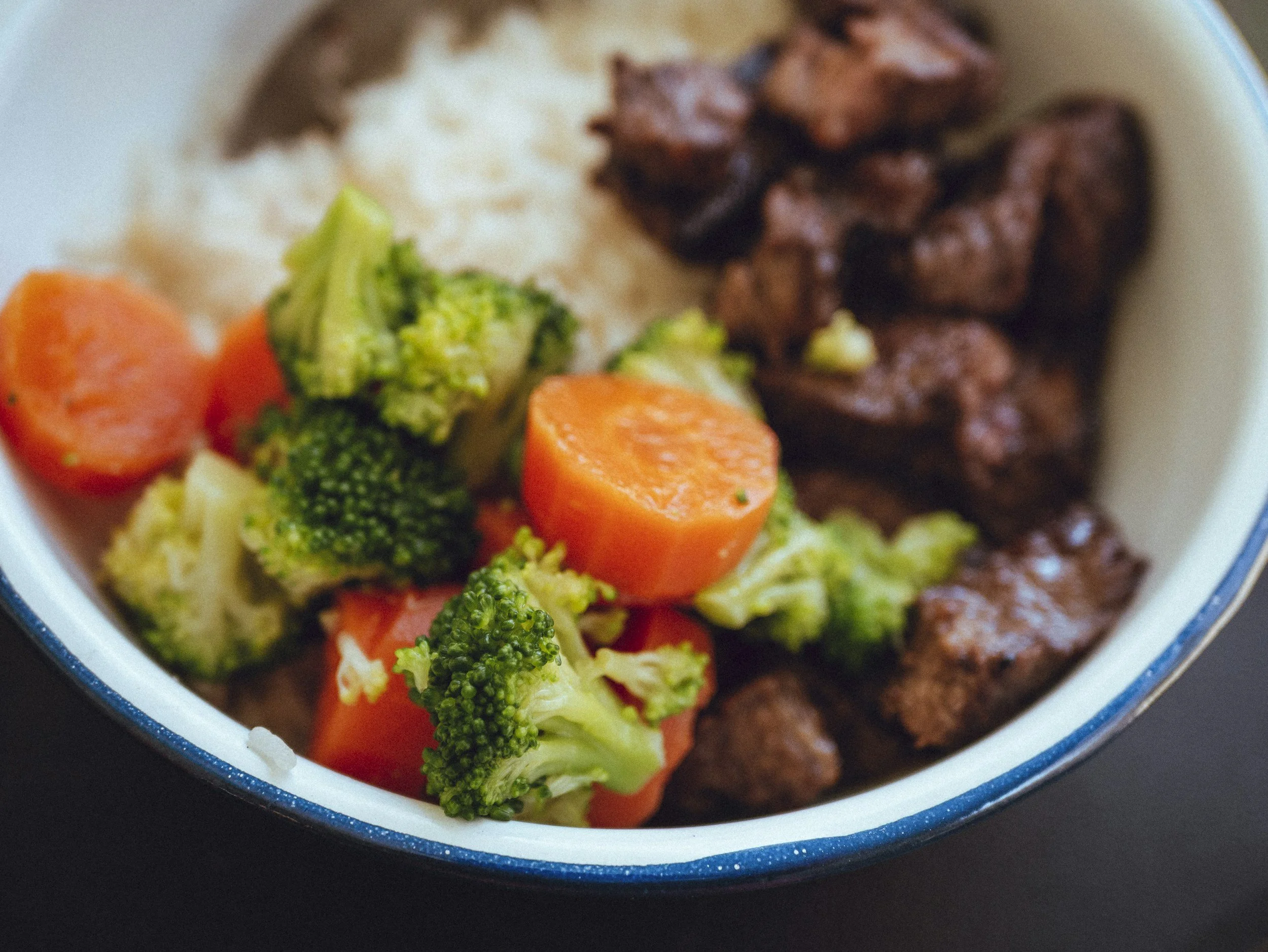
Being Calorie Conscious Doesn't Mean You Don't Enjoy Food
You don't have to stop eating out, enjoying someone else's cooking, or eating the foods you love. You just learn to approach food differently.
One thing I've noticed is that people sometimes misunderstand what it means to become calorie and macro conscious.
They assume that because you're paying attention to what you eat, you've suddenly become someone who doesn't enjoy restaurants, doesn't want anyone cooking for them, or has to inspect every meal before taking a bite.
That's not it at all.
You can absolutely enjoy eating out. You can enjoy having someone prepare a meal for you. You can occasionally eat something that isn't particularly macro friendly.
The difference is that you become more intentional about how you approach food.
And sometimes, all we need is a little heads-up.
A little planning goes a long way
When you become calorie and macro conscious, you start looking at your entire day differently.
You aren't necessarily deciding what you can and cannot eat based on one meal. You're looking at your overall intake and figuring out how everything fits together.
For example, if I know we're going out to eat tonight, I can plan around that.
Maybe breakfast and lunch are a little lighter. Maybe I prioritize protein earlier in the day. Maybe I make a few adjustments so I have room for a restaurant meal that I know will be higher in calories.
That's perfectly fine.
In fact, you eventually develop a skill for finding macro-friendly options at restaurants. You learn which meals are better choices, what substitutions make sense, and which menu items can be modified without sacrificing the experience.
You don't have to order a plain grilled chicken breast and a side of steamed broccoli every time you leave the house.
You just learn how to make better decisions.
But having a heads-up helps. When you've planned your day around a certain calorie and protein target, an unexpected heavy meal can throw off those plans.
That doesn't mean you can't enjoy it. It just means a little communication goes a long way.
When someone else is cooking, a little separation helps
Here's another thing worth understanding.
If you're cooking for someone who pays attention to calories and macros, don't assume they're being difficult when they ask how something was prepared.
And please don't take it personally.
If you aren't sure how they prefer something cooked, just ask.
When in doubt, prepare the meat and sides separately. Season everything however you like. There's generally very little to worry about with most herbs and dry seasonings.
The bigger considerations are usually the added fats and sauces.
It's the oil in the skillet, the butter added to the vegetables, the heavy cream in the sauce, and the amount of dressing or glaze poured over everything.
Those little additions can change the calorie content of a meal considerably.
For example, there's a difference between cooking chicken with a little seasoning and olive oil versus breading it, frying it, and covering it in a cream-based sauce.
Both can taste delicious. But they're very different meals nutritionally.
The same goes for one-pot meals and casseroles.
You might know exactly what went into that dish, but someone tracking their food may have no idea how much oil, butter, cheese, cream, or other ingredients ended up in their serving.
That's why we will occasionally ask what's in something, particularly when everything has been combined into one dish.
It's not an insult to your cooking.
It's simply that knowing what's in our food has become part of how we approach eating.
Once you understand food, you start looking at it differently
This is probably the biggest change.
Once you've spent enough time tracking your food, understanding serving sizes, and paying attention to how different meals make you feel, you develop a different relationship with eating.
You start recognizing things you never really paid attention to before.
You learn:
Which foods keep you full until your next meal.
Which foods leave you bloated.
Which foods upset your stomach.
Which foods seem to cause digestive issues.
Which meals leave you feeling sluggish or sleepy.
Which foods make it harder to maintain your weight or reach your goals.
And eventually, you begin identifying foods that simply aren't worth eating anymore.
I've tried circling back to certain foods I used to eat regularly, sometimes months or even years ago.
My mind says yes, but my body says no.
I can often feel the difference almost immediately.
The funny thing is that when I ate that way more regularly, I was accustomed to feeling a certain way after meals. I didn't necessarily recognize the bloating, sluggishness, or digestive discomfort as anything unusual.
I just thought that was normal.
It wasn't until I changed how I ate that I realized how much better I could feel after a meal.
That doesn't mean everyone will have the same experience or react to the same foods. But paying attention to how your body responds can teach you quite a bit.
You don't need 30 different meals
Here's something else people tend to overcomplicate.
Once you've gone through the process of learning what works for you, you eventually find a handful of meals that you genuinely enjoy.
You might have four or five breakfast options, a few lunches, and several dinners that you rotate throughout the week.
And that's perfectly fine.
People sometimes act as though eating similar meals throughout the week is boring or restrictive.
But think about it.
Most people already rotate through the same five to seven meals, give or take, every week.
You probably have your favorite breakfast, your usual lunch options, and a few dinners that make regular appearances.
The difference is learning how to make those meals more macro friendly.
Instead of completely reinventing your diet, you make smarter versions of the foods you already enjoy.
That's a much easier approach to maintain long term.
Healthy food can still look and taste delicious
You don't have to sacrifice flavor to make a meal healthier.
Start with leaner cuts of meat. Cook them in the oven, on the grill, in the air fryer, or in a skillet with a reasonable amount of oil.
You don't have to coat everything in flour, breadcrumbs, or heavy batter to enjoy it.
Season your food however you like. Garlic, onion powder, paprika, black pepper, chili powder, herbs, and plenty of other seasonings can add flavor without contributing many calories.
Experiment with sugar-free or lower-calorie sauces when you enjoy them. And when you're using regular sauces, learn what an actual serving looks like.
Typically, that's one or two tablespoons, depending on the product.
Not half a cup.
The same principle applies to things like olive oil and coffee.
That little drizzle of olive oil can quickly become several tablespoons when you're free-pouring. And that heavy-handed splash of cream in your coffee adds up, too.
You don't have to eliminate these things. You just need to understand how much you're using.
That's one of the biggest benefits of tracking food for a while. Eventually, you develop a better eye for portions and serving sizes.
You don't have to weigh every single ingredient forever. But you should understand what a serving actually looks like.
The hardest habit might be stopping at one plate
Here's something that deserves more attention.
Learning to prepare healthier meals is important, but learning how much to eat is just as important.
One of the biggest habits to work on is avoiding unnecessary seconds and thirds.
Put an appropriate amount of food on your plate the first time.
Include your protein, vegetables, and whatever sides you're having. Make a complete meal that satisfies you.
Then give yourself time to eat and recognize when you're full.
It's easy to go back for more simply because the food tastes good, because there's plenty left, or because that's what you've always done.
But there's a difference between enjoying a meal and continuing to eat simply because more food is available.
You don't have to leave the table hungry. You just have to learn what an appropriate portion looks like for you.
And if you're still hungry, there's nothing wrong with adjusting your portions. The goal isn't to deprive yourself. It's to become more intentional.
It's about finding what works for you
At the end of the day, becoming calorie and macro conscious isn't about turning every meal into a math problem.
It's about learning.
You learn what you're eating, how much you're eating, and how different foods affect your energy, digestion, appetite, and overall goals.
You learn how to enjoy restaurants without throwing away an entire day's worth of planning.
You learn how to make your favorite meals a little healthier without sacrificing flavor.
You learn that a serving of sauce doesn't have to be half the bottle, and a drizzle of oil doesn't have to turn into a pour.
And most importantly, you learn that eating healthier doesn't mean you have to stop enjoying food.
You can still have pizza. You can still enjoy a restaurant meal. You can still appreciate someone taking the time to cook for you.
You just become more aware of what goes into those meals and how they fit into your overall routine.
That's the real benefit of taking the time to track your food and understand nutrition.
Eventually, you stop guessing.
You develop habits, find meals you enjoy, understand your portions, and become much better at making decisions without constantly thinking about calories.
The goal isn't to spend the rest of your life tracking every bite. It's to learn enough that you don't have to.
Thanks for reading The Deep Dive!
What do you think?
Have a thought about this Deep Dive? I'd love to hear it.
Email me at thedeepdive@touchesoftech.com and let me know what you think—or send along an idea for something you'd like to see explored in a future Deep Dive.
I can't promise I'll write about every suggestion, but I'm always interested in hearing what you're curious about.