

I Went Vegan for Five Years. Here’s What It Actually Taught Me About How I Need to Eat
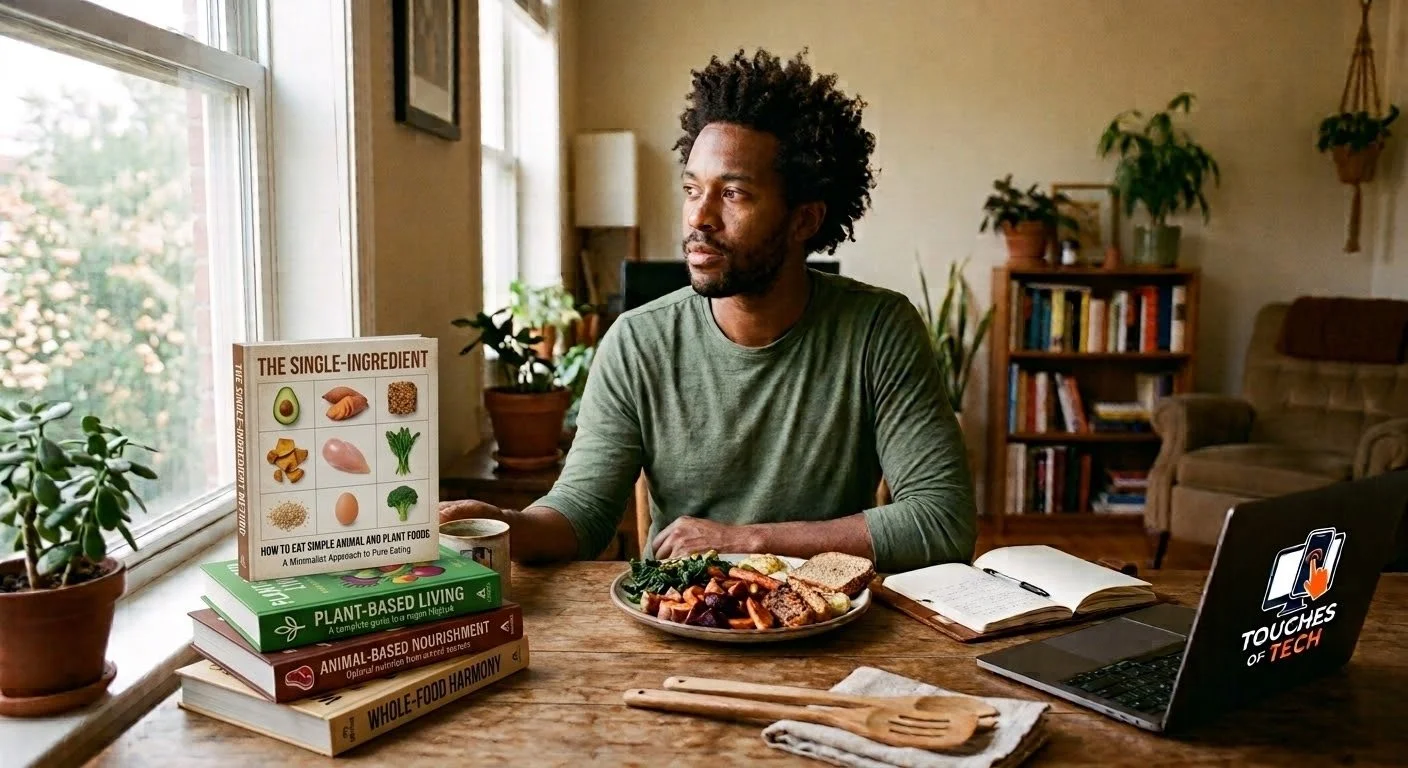
I Went Vegan for Five Years. Here’s What It Actually Taught Me About How I Need to Eat
Sometimes the best diet lesson you can learn is that there isn’t one diet that works perfectly for everyone.
My journey into healthy eating didn’t actually start with veganism.
It started with loss.
Where My Interest in Healthy Eating Started
I started paying much closer attention to food, health and lifestyle after watching people around me struggle with illness.
In particular, I was trying to find ways to help my dad during his battle with cancer. He ultimately passed away in 2019.
While searching for information that might help him, I stumbled into a much bigger world of research around nutrition, lifestyle and the idea that food can play an important role in health and, in some cases, help prevent or improve certain diet- and lifestyle-related conditions.
That was the rabbit hole.
And once I went down it, I really didn’t stop.
I started looking at my own eating habits.
Then I started looking at the people around me.
My dad.
My grandparents.
My aunts and uncles.
Friends.
Former coworkers.
People I had known for years.
And eventually, I started connecting dots that I simply wasn’t mature enough to recognize when I was younger.
I had lost a close family friend, followed by my uncle, my aunt, my dad and eventually my grandfather on my dad’s side, all within a relatively short period of time.
When you’re younger, you tend to see each loss as an individual event.
As I got older and learned more about health, I started looking at those experiences differently.
I began asking questions.
How much of what we call “family history” is actually genetics, and how much is shared lifestyle?
Because families don’t just share DNA.
They often share food.
They share habits.
They share routines.
They share what they consider a normal portion.
They share how often they exercise—or don’t.
They share sleep habits.
They share how they celebrate.
They share what they keep in the refrigerator.
They share what they order at restaurants.
They share what they were taught about food when they were children.
So sometimes when we say:
“Heart disease runs in my family.”
or
“Diabetes runs in my family.”
or
“Everybody in my family struggles with their weight.”
there may be more going on than genetics alone.
Sometimes the thing that runs in the family is the lifestyle.
That doesn’t mean genetics don’t matter. They absolutely can.
Some people have genuine genetic predispositions that make certain health conditions more likely.
But I think we sometimes use genetics and family history as an explanation before we’ve honestly examined the things we actually have control over.
Before blaming genetics, I think we should at least ask:
Have I mastered the basics?
How am I eating?
How much am I moving?
Am I strength training?
How much sleep am I getting?
How much highly processed food am I consuming?
How much added sugar?
How much alcohol?
How much of my day am I sitting?
What does my overall lifestyle actually look like?
Because if an entire family eats the same way, doesn’t exercise, doesn’t sleep enough and follows the same unhealthy routines, it’s not surprising that similar health problems can appear throughout the family.
That doesn’t prove that the condition was inherited.
It may mean that some of the habits were inherited too.
That realization completely changed how I looked at health.
That’s What Eventually Led Me to Veganism
As I continued researching, I kept coming across plant-based and whole-food approaches to eating.
Eventually, I decided to go completely vegan.
I went vegan in the summer of 2019 and stayed that way for approximately five years, until the summer of 2024.
At the time, veganism made sense to me based on everything I was learning.
And I’m not going to rewrite history now that I eat animal products again.
Those five years were valuable.
I learned a tremendous amount.
I lost weight.
I felt more energetic.
I slept better.
My seasonal allergies seemed to improve.
But more importantly, I learned how to actually pay attention to what I was putting into my body.
And I never stopped researching.
That last part is important.
I didn’t want veganism to become an identity that prevented me from questioning what I believed.
I wanted to understand nutrition—not just understand vegan nutrition.
So throughout those five years, I continued reading, watching, listening and experimenting.
Eventually, that research led me somewhere I didn’t expect.
Not back to the standard American diet.
Not to another extreme diet.
But toward something much simpler:
A more balanced, whole-food approach built primarily around single-ingredient foods from both plants and animals.
And that’s where I am today.
Five Years of Reading Food Labels Will Change You
One of the biggest things veganism taught me was how important it is to actually read the ingredient list.
When you start avoiding animal products, you quickly discover that dairy, eggs and other animal-derived ingredients are hiding in an incredible number of packaged foods.
Something can look completely harmless on the front of the package and still contain ingredients you weren’t expecting.
So I started reading everything.
And eventually I realized something:
You don’t have to be vegan to benefit from reading food labels.
Everyone should probably get into the habit.
I generally prefer packaged foods with relatively simple ingredient lists.
A good rule of thumb I adopted was:
If the ingredient list is so complicated that I wouldn’t reasonably be able to buy the ingredients myself and make something similar at home, I have to ask myself whether I really need it.
That doesn’t mean every food with a long ingredient list is automatically unhealthy.
It means that knowing what you’re actually eating is valuable.
The front of a package is marketing.
The ingredient list is information.
What I Loved About Being Vegan
For a long time, I genuinely felt good eating a completely plant-based diet.
I lost weight.
I felt more energetic.
I slept better.
Even my seasonal allergies seemed better.
And because I was cooking so much more, I became a significantly better cook.
That last part might actually be one of the biggest benefits I took away from the experience.
Going plant-based forced me to become more creative.
I couldn’t simply throw a piece of meat on a plate and call dinner finished.
I had to figure out how to make vegetables, grains, legumes and other plant foods interesting.
And that’s where I really learned the importance of seasoning.
Season Your Vegetables Like You Season Your Meat
One thing I noticed while learning to cook plant-based foods was how differently people approach vegetables versus meat.
People will spend ten minutes figuring out the perfect seasoning for a steak.
Then they’ll throw some broccoli into a pot of boiling water and wonder why they don’t like broccoli.
😂
Vegetables need seasoning too.
Learning how to use different spices, herbs, sauces and cooking methods completely changed my relationship with foods I didn’t like growing up.
Some of the foods I avoided as a kid became foods I genuinely enjoyed as an adult.
That experience taught me something important:
Sometimes you don’t hate the food. You hate the way the food was prepared.
This is one reason I think everyone should learn how to cook at least a handful of genuinely good plant-based meals.
You don’t have to become vegan.
You don’t even have to eat primarily plant-based.
But learning how to turn vegetables and other plant foods into something you actually enjoy is a skill that will serve you for the rest of your life.
But There Was a Downside
Eventually, I started noticing some things about my diet that weren’t working as well for me.
The biggest issue was how much fiber and carbohydrates I was consuming.
Plant-based diets can be extremely high in fiber.
For many people, that’s a great thing.
For me, eventually, more wasn’t necessarily better.
There were days when I was having three, four or even five bowel movements.
And while regularity is generally considered a good thing, there can absolutely be a point where your individual digestion simply doesn’t feel comfortable with the amount of fiber you’re consuming.
I also noticed that I could eat a substantial amount of food, feel physically full from the volume, and still not feel particularly satisfied.
I could be bloated without feeling satiated.
That distinction became extremely important to me.
Being full and being satisfied aren’t always the same thing.
At times, that lack of satiety also left me looking for something else to eat between meals.
And that’s where healthy eating can get complicated.
You can technically be eating “healthy” foods and still end up eating more food than you need because the meals aren’t satisfying you.
When “Healthy” Stopped Feeling Healthy
After trying different variations of vegan and plant-based eating, I eventually reached a point where my body wasn’t responding the way it had earlier in the five years.
I started experiencing headaches and low energy.
And then something happened that I honestly didn’t expect.
I started craving meat.
Not because someone convinced me I needed to eat meat.
Not because I suddenly decided veganism was stupid.
I just started wanting it.
It was one of those moments where I felt like my mind and body were giving me information that I couldn’t ignore.
Of course, after five years without meat, I had concerns about how my stomach would react.
So naturally, I did what I always do:
I researched it.
I spent several days reading about what could happen when someone reintroduces animal products after years without them.
Eventually, I decided it was time.
My First Burger After Five Years
My first meal containing meat was extremely simple.
Two grass-fed ground beef patties.
Cooked in a cast-iron skillet.
No bun.
No bread.
No complicated toppings.
The first bite or two felt strange.
After five years without meat, I wasn’t sure what to expect.
Then the awkwardness disappeared.
I really enjoyed the burgers.
And that became the beginning of gradually reintroducing other animal foods into my diet.
I didn’t go from vegan to eating everything in sight overnight.
I took my time.
I gradually added individual foods back in:
Beef
Eggs
Butter
Bacon
Chicken
Lamb
Turkey
Pork
And something interesting happened.
Eating animal products felt different this time.
Not necessarily because the foods themselves had changed.
I had changed.
Veganism Didn’t Make Me Stop Learning About Food
One of the things I’m most grateful for is that I never stopped learning about nutrition while I was vegan.
I didn’t want to develop tunnel vision.
I didn’t want to become someone who believed that one particular diet had all the answers.
I wanted to understand nutrition in general.
That distinction mattered.
I never privately believed that I could never eat an animal product again under any circumstances.
But I also didn’t want to advertise that while I was vegan because I wanted to take the commitment seriously.
Eventually, though, I realized that being open-minded about nutrition doesn’t mean you aren’t committed to your health.
It means you’re willing to change when you learn something new.
I Don’t Really Want a Dietary Label Anymore
Today, I don’t really care about putting a label on the way I eat.
I’m not vegan.
I’m not vegetarian.
I’m not trying to publicly identify as keto, carnivore or any other specific dietary category.
If I had to describe it, I’d say:
I focus primarily on single-ingredient whole foods from both plant and animal sources.
That’s probably the simplest description.
I eat plants.
I eat meat.
I eat eggs.
I eat dairy.
I eat carbohydrates.
I just try to be much more intentional about what those foods look like, how much I’m eating and how they make me feel.
And I’ve become much more carb mindful than I was before.
Carbs Aren’t the Enemy. But More Isn’t Always Better.
One of the biggest things I’ve learned is that my body doesn’t seem to respond well to large amounts of carbohydrates stacked together.
A high-carb meal followed by another high-carb food can leave me feeling sluggish.
Especially if I’m not going to use that energy through activity.
So I’m not trying to eliminate carbohydrates.
I’m trying to match them to my activity and my goals.
That means I’m much more likely to prioritize whole-food carbohydrate sources and avoid making every part of a meal high in carbohydrates.
I’m also much more cautious about highly processed carbs and sugary foods.
This is less about declaring a particular food “bad” and more about understanding how certain foods affect me.
Protein Became a Bigger Priority
Another major change was putting much more emphasis on protein.
These days, I generally aim for around 150–200 grams of protein per day.
I don’t treat that range like a pass/fail test.
Some days I’m below it.
Some days I’m above it.
The bigger goal is simply:
Get protein into every meal whenever possible.
I’ve found that doing this makes meals much more satisfying and makes it easier for me to manage hunger throughout the day.
Greek yogurt has also become one of my favorite snacks and desserts.
Not the versions loaded with added sugar.
I’ll have plain Greek yogurt with fruit and honey, or high-protein options such as Oikos or Chobani’s 20-gram protein yogurt.
Sometimes I’ll add granola.
Again, the goal isn’t to make eating feel like punishment.
It’s to make the healthier option something I actually enjoy eating.
Stop Trying to Invent 30 Different “Diet Meals”
Another lesson I’ve learned is that eating healthy doesn’t have to mean constantly searching for new recipes.
In fact, I think that can make things unnecessarily complicated.
Find five to seven meals you genuinely like.
Then repeat them.
Make healthier, macro-friendly versions of those meals.
Change the seasonings.
Change the sauce.
Change the side dishes.
Rotate your proteins.
But you don’t need an entirely different menu every day.
The goal isn’t to eat “diet food.”
The goal is to make the food you already like work better for your goals.
Learn What a Serving Actually Looks Like
For a period of time, I think tracking your food can be extremely useful.
Not necessarily because you need to track every calorie for the rest of your life.
But because most people don’t really know what a serving looks like until they’ve measured it.
I learned that weighing and tracking food temporarily can teach you a lot.
Eventually, you start recognizing portions without having to pull out a food scale every time.
That’s when tracking can become less necessary.
The same thing applies to calories.
You can’t adjust what you don’t track.
If you’re trying to lose weight and nothing is changing, you need some kind of feedback mechanism.
If you’re maintaining your weight, you need to know what maintenance actually looks like for you.
And if your goal changes, your food intake may need to change with it.
I Also Stopped Being Afraid of the Scale
I weigh myself much more regularly now.
Not because I expect the number to be identical every day.
It won’t be.
Water, sodium, food volume, activity and a dozen other things can move the scale around.
What matters to me is the trend.
I care even more about how my clothes fit.
I’ve gotten tired of buying bigger clothes every time my weight creeps up.
So I’ve taken a different approach:
The smaller clothes stay.
If they stop fitting properly, that’s feedback.
It’s not a reason to panic.
It’s a reason to adjust.
Food Isn’t the Only Part of the Equation
This is another thing that can get lost in conversations about dieting.
Your food matters.
But so do:
Strength training
Daily movement
Cardio
Sleep
Stress management
Recovery
Your overall mindset
For me, strength training has become an important part of the equation.
I’m not trying to exercise for hours every day.
I want something sustainable.
A few days of strength training each week, regular movement and some cardio can go a long way when combined with a reasonable diet.
And sleep matters more than people want to admit.
You can have a great nutrition plan and still feel terrible if you’re consistently exhausted.
The Problem With “The One Perfect Diet”
This is probably the biggest lesson I took away from the entire experience.
There isn’t necessarily one perfect diet.
There are different approaches that can work for different people at different times.
Vegan.
Plant-based.
Keto.
Animal-based.
Carnivore.
Mediterranean.
Something else.
The important question isn’t:
“Which diet is the best?”
The better question is:
“Which foods and eating pattern allow me to consistently look, feel and perform the way I want?”
That’s a completely different question.
Every Fad Diet Has Something in Common
One thing I’ve noticed after looking at all of these different approaches is that many popular diets eventually lead people toward eating more whole foods and fewer highly processed foods.
That’s probably not an accident.
You can overeat healthy food.
Of course you can.
But it’s generally much easier to consume large amounts of calories when your food is highly processed, extremely palatable and designed to make you want another serving.
Whole foods tend to require more preparation.
They’re often more filling.
And they make you more aware of what you’re actually eating.
That’s why I don’t think the biggest battle is necessarily between vegan and carnivore.
The bigger battle is often between real food and ultra-processed food.
Cooking at Home Changed Everything
Another thing I learned after becoming comfortable in the kitchen is that I simply don’t enjoy eating out as much as I used to.
I rarely eat at restaurants—maybe once or twice a month.
And that’s not because I think restaurants are automatically bad.
It’s because once you learn how to make the foods you love at home, your standards change.
You start noticing things.
The amount of salt.
The amount of sugar.
The amount of oil.
The portion sizes.
The quality of the ingredients.
And sometimes you realize that you can make the same meal at home exactly how you want it.
I’ll take a good local mom-and-pop restaurant that actually cooks from fresh ingredients over a chain restaurant serving highly standardized food any day.
But even then, I don’t need to eat out constantly.
The more control I have over my food, the easier it is to control my overall nutrition.
Even “Healthy” Foods Can Be Prepared Unnecessarily
I’ve also stopped thinking that individual foods need to be transformed into something completely different to be enjoyable.
Take a hamburger.
You can have a hamburger without automatically needing:
A giant bun
Multiple sauces
Cheese
Fries
A sugary drink
The same thing applies to chicken.
You don’t have to bread it in flour and deep-fry it to make it taste good.
And potatoes don’t have to be deep-fried in a restaurant fryer either.
You can cut potatoes, add a reasonable amount of avocado oil, extra-virgin olive oil or another cooking fat, season them well and cook them in the oven or air fryer.
The food itself isn’t necessarily the problem.
Sometimes it’s everything we add to it.
What About All Those Studies?
Another thing that has changed for me is how I look at nutrition research.
Over the years, we’ve all seen headlines telling us that a particular food is either good or bad.
One year something is considered healthy.
A few years later we’re told to avoid it.
Then another study comes along and changes the conversation again.
I’ve learned to be much more skeptical of oversimplified nutrition headlines.
There have certainly been cases where research has been influenced by industry interests, and there have also been poorly designed studies, observational studies that can’t establish cause and effect, and nutrition findings that were overstated by the media.
But that doesn’t mean all nutritional research is false.
It means we have to learn how to interpret it.
Rather than looking for one study that confirms what we already believe, I’d rather look at the totality of evidence and then compare that information with my own experience.
That’s another reason I don’t want my diet to become an ideology.
I’m willing to change my mind.
You Have to Learn Your Own Body
This is probably where my five-year experiment with veganism taught me the most.
There are general nutritional guidelines.
There are studies.
There are experts.
There are influencers.
There are documentaries.
There are people on social media who will tell you that their diet is the only diet that works.
But none of that changes the fact that you still have to live in your own body.
What works incredibly well for one person might not work as well for another.
I learned that I personally seem to do better with less fiber and fewer carbohydrates than I was consuming during my plant-based years.
That doesn’t mean everyone should eat less fiber.
It means I learned something about myself.
That’s an important distinction.
Master the Basics First
Before we start chasing supplements, superfoods, expensive wellness products or the newest diet trend, I think we should master the basics.
Eat mostly whole foods.
Get enough protein.
Eat fruits and vegetables that work well for you.
Pay attention to portions.
Limit highly processed foods.
Move your body.
Strength train.
Get enough sleep.
Manage stress.
Drink enough water.
Maintain a healthy body weight.
And then, once those fundamentals are in place, you can start experimenting with the finer details.
I think we sometimes want the complicated answer because the simple answer isn’t as exciting.
But the basics work.
And they are boring enough that most people don’t consistently do them.
Don’t Let a Diet Become Your Identity
This might be the biggest lesson of all.
A diet is a tool.
It shouldn’t have to become your identity.
I don’t need to tell everyone I’m vegan.
I don’t need to tell everyone I’m keto.
I don’t need to tell everyone I’m carnivore.
I don’t need to defend a particular diet because I ate that way for five years.
I’m interested in eating well.
That’s it.
If I learn something tomorrow that changes how I approach food, I want to be able to change.
That’s not inconsistency.
That’s learning.
So How Do You Find What Works for You?
I don’t think you find your ideal lifestyle by reading one book or watching one documentary.
You experiment.
You learn.
You pay attention.
You make adjustments.
And you give things enough time to determine whether they actually work.
Look at different approaches.
Learn about plant-based eating.
Learn about animal-based eating.
Learn about keto.
Learn about lower-carb diets.
Learn about whole-food nutrition.
Then take the useful pieces and figure out what actually works for you.
But don’t just pay attention to the scale.
Pay attention to:
Your energy
Your hunger
Your digestion
Your sleep
Your strength
Your clothes
Your weight trends
Your ability to stick with the plan
How you feel throughout the day
Because a diet isn’t successful simply because you can survive it for 30 days.
A successful way of eating is something you can actually live with.
My Biggest Takeaway
I don’t regret being vegan for five years.
In fact, I probably wouldn’t understand food the way I do today if I hadn’t done it.
Those five years taught me how to read labels.
They taught me how to cook.
They taught me how to season vegetables.
They introduced me to foods I probably wouldn’t have tried otherwise.
They taught me that you can make incredibly satisfying meals without animal products.
And eventually, they also taught me that something can be healthy in general and still not be the best fit for me in the amount I was consuming it.
Then reintroducing animal products taught me something else:
I didn’t have to throw away everything I’d learned.
I could keep the best parts.
I could continue cooking at home.
I could continue eating vegetables.
I could continue avoiding highly processed foods.
I could continue watching my portions.
I could continue prioritizing protein.
I could continue paying attention to how food made me feel.
I could simply add other foods back in.
And that’s essentially where I am today.
I eat real food from both plants and animals.
I try to keep highly processed foods to a minimum.
I’m mindful of carbohydrates.
I prioritize protein.
I adjust calories depending on whether I’m trying to lose weight or maintain it.
I pay attention to my portions.
I exercise.
I sleep.
I watch the scale for trends.
I pay attention to how my clothes fit.
And most importantly, I’m still learning.
Because after five years of being vegan and then changing how I eat again, I’ve realized something:
The goal isn’t to find the perfect diet.
The goal is to build a way of eating that helps you live the life you actually want to live.
And sometimes, finding that requires a little trial and error.
That’s okay.
Your diet doesn’t have to have a label.
It just has to work for you.
Thanks for reading The Deep Dive!
What do you think?
Have a thought about this Deep Dive? I'd love to hear it.
Email me at thedeepdive@touchesoftech.com and let me know what you think—or send along an idea for something you'd like to see explored in a future Deep Dive.
I can't promise I'll write about every suggestion, but I'm always interested in hearing what you're curious about.
Get new Dives and The Deep Dive: This Week's Dives delivered straight to your inbox each weekend.
📧 Subscribe
You'll be taken to our current newsletter provider to complete your free subscription.