
How Global Football, Urbanism, and My Fitness Goals Work Together
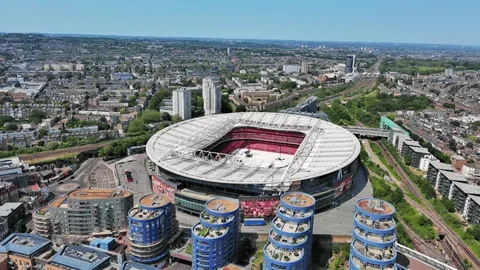
How Global Football, Urbanism, and My Fitness Goals Work Together
For years, I’ve been trying to figure out how to add soccer—what most of the world calls football—to my sports rotation.
It just never really clicked.
Growing up in America, American football is everywhere. The NFL is talked about year-round, especially here in Kansas City with the Chiefs. Then there’s the NBA, MLB, NHL, college football, college basketball, and everything else competing for your attention.
We have Sporting Kansas City and the Kansas City Current, too. But even having professional men’s soccer and women’s soccer here doesn’t mean they get the same constant local sports attention as the Chiefs.
So for years, I would watch a little soccer here and there, try to understand it, and then move on.
Then the 2026 World Cup came around.
With the World Cup being played in the United States—and Kansas City being one of the host cities—I decided I was finally going to actually watch it and figure out what everyone else seemed to understand that I didn’t.
And that started a much bigger rabbit hole.
It started with the athletes
One of the first things I noticed was the physical build of the players.
I had already been following fitness content for a while, especially guys talking about height, weight, body composition, training, and what it actually takes to build a lean, athletic physique.
I wasn’t looking to get huge.
I wanted that lean, toned, athletic look—the kind of body that looks like it was built to move rather than just lift heavy things.
Then I started looking at footballers.
A lot of them are somewhere around average male height, give or take. You see players around 5’7”, 5’8”, 5’9”, 6’0”, and beyond. Obviously, there are taller and shorter players, but you don’t need to be an NBA-sized human being to be an elite footballer.
That caught my attention.
Then I started paying attention to how they moved.
And that’s when I realized I might have been watching the sport all wrong.
The buildup was the action
Years ago, a former coworker tried to explain football to me.
I remember him comparing the low scores to American football if touchdowns were only worth one or two points.
At the time, I understood the basic idea, but I didn’t really understand the deeper point.
Why watch a game where the final score might be 1-0?
It took me years to finally get it.
The answer isn’t just the goal.
It’s everything happening before the goal.
The passing.
Creating space.
Moving defenders.
Changing the point of attack.
Positioning.
Making runs.
Trying to pull the defense apart.
Creating a chance.
And then finally taking the shot.
The buildup was the action.
That was the mindset shift for me.
I had been waiting for the obvious action—the equivalent of waiting for the touchdown, home run, three-pointer, or big play.
Instead, football taught me to watch what was happening between those moments.
And once I started seeing that, a 0-0 game didn’t necessarily mean nothing was happening.
There could be an entire chess match taking place in front of me.
Then I fell down another rabbit hole
Once I started getting interested in the actual game, I started learning about the ecosystem around it.
And this is where global football really grabbed me.
There are clubs all over the world.
Players develop through academies.
Players move between clubs.
Transfer windows open and close.
Clubs compete in domestic leagues and cups while also playing in international competitions.
There are promotion and relegation systems in many leagues.
The world’s best players can move between countries and leagues, creating a global player market that feels very different from the American sports system I’m used to.
It isn’t just a sport.
It’s an entire ecosystem.
And I like ecosystems.
I like understanding how things connect.
The time commitment also made sense
Another thing I started appreciating was the actual structure of a football match.
You have two 45-minute halves, a 15-minute halftime, and then additional stoppage time added by the referee for things like injuries, substitutions, disciplinary incidents, VAR checks and reviews, and other delays.
The clock doesn’t work like American football, where it constantly stops and restarts.
There are generally no commercial breaks breaking the match into a series of separate viewing segments.
So you basically have a roughly two-hour window from start to finish.
That actually fits my life pretty well.
I’ve gotten to a point where I’m much more intentional about how I spend my time. I’m trying to sleep consistently, eat better, exercise, walk more, write, learn, and actually do things instead of spending three or four hours sitting on the couch watching sports.
Football can fit into my day.
A match can start early in the morning or in the afternoon, and I can still have most of the day ahead of me.
That’s very different from mentally committing an entire afternoon to American football.
And that doesn’t mean I stopped liking American football.
My relationship with it has just changed.
Then I had to pick a league
Once I decided I was actually going to follow football, I needed somewhere to start.
I settled on the Premier League.
That seemed like the easiest place for me to stay connected to the sport I had started watching during the World Cup.
But then came the next question:
Which club?
Initially, I thought I might choose a team because of Ted Lasso.
Except I had some of the story wrong.
AFC Richmond is fictional, and the fictional Nelson Road stadium was modeled on Crystal Palace’s real Selhurst Park.
So I wasn’t completely off-base with the Crystal Palace connection. I just didn’t understand the connection yet.
Once I started researching Premier League clubs, I learned about the so-called Big Six and started looking into their histories.
I didn’t want to simply pick the team that won the most.
I didn’t want to pick the most popular team.
I wanted to actually find a connection.
Eventually, I narrowed it down to Liverpool and Arsenal.
And Arsenal kept pulling me further down the rabbit hole.
The crest.
The history.
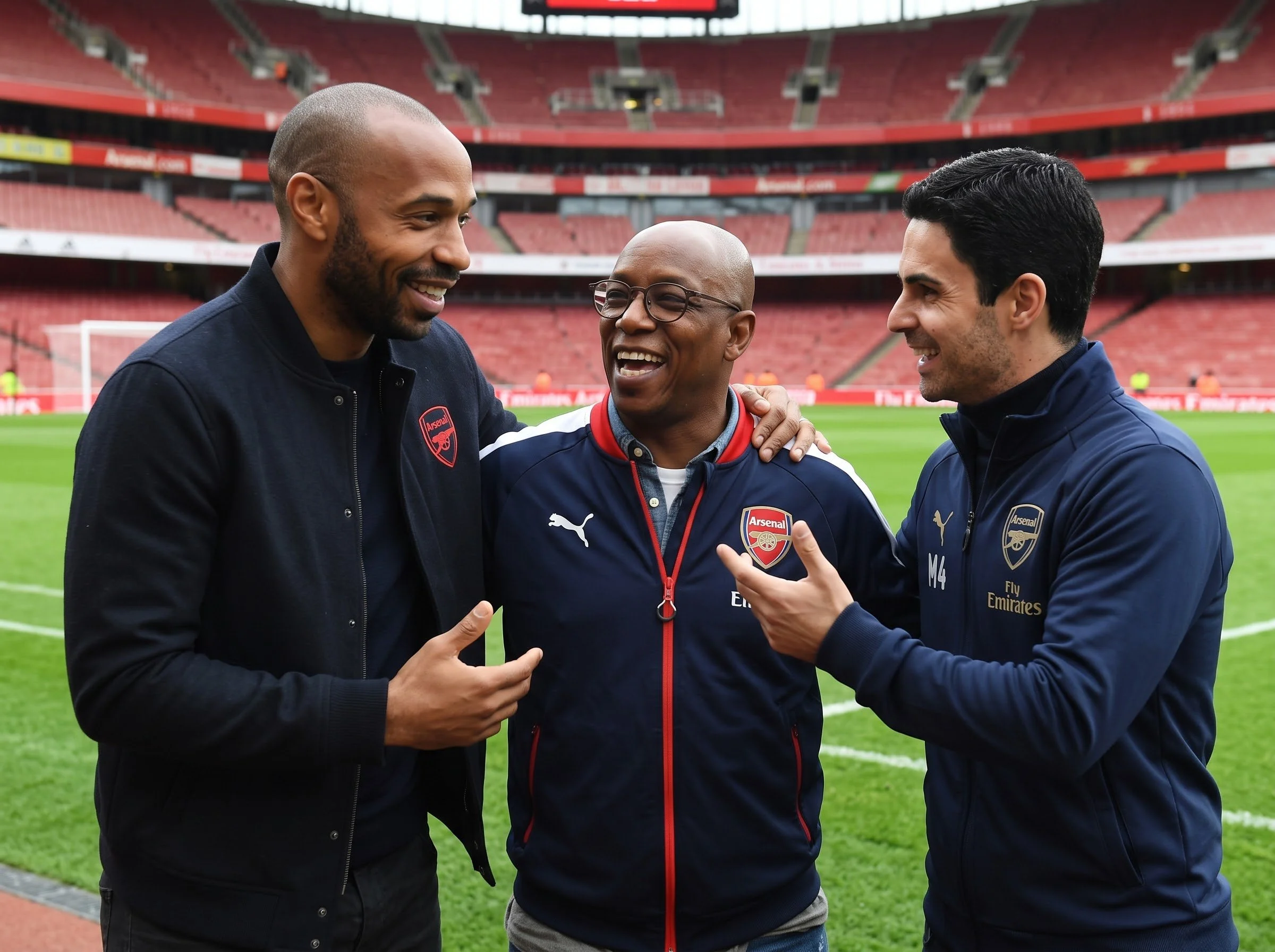
Ian Wright.
Thierry Henry.
Mikel Arteta.
The players.
The style of play.
The more I learned, the more interested I became.
And then I noticed something that connected football to something else I’ve been interested in for years.
Urbanism.
Football and cities
I’ve been interested in urbanism for a long time.
Walkability.
Mixed-use neighborhoods.
Public transportation.
Historic street networks.
Corner stores.
Third places.
Then I started looking at Arsenal’s Emirates Stadium.
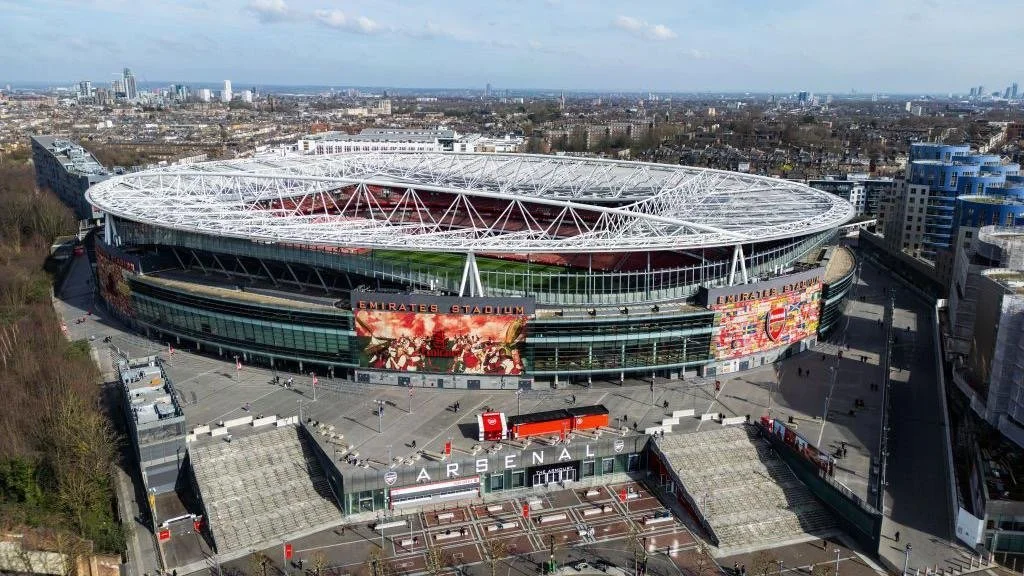
It’s not sitting in the middle of an enormous sea of parking lots like many American stadiums.
It’s part of the neighborhood.
People can walk to it.
They can take the Underground.
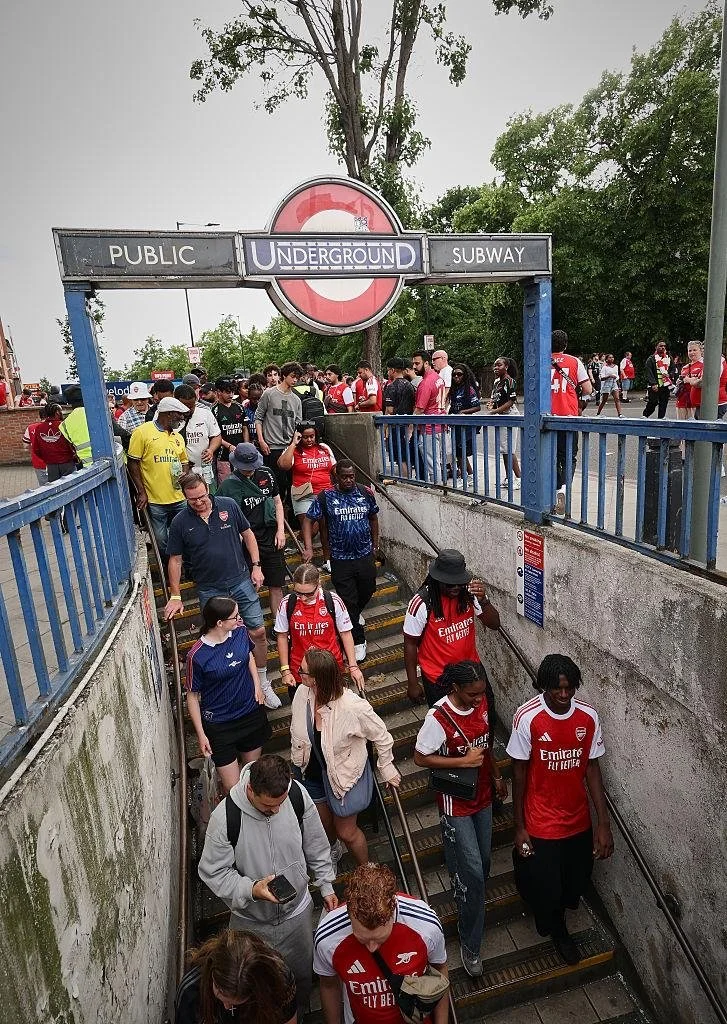
They can take buses and trains.
There are businesses, pubs, restaurants, and other things around the stadium.
The stadium isn’t simply a place you drive to, park at, watch a game, and drive home from.
It’s part of the city.
And suddenly football wasn’t just connecting with my interest in fitness.
It was connecting with my interest in urbanism.
That’s when I started looking at matchday differently.
The trip to the stadium is part of the experience.
The neighborhood is part of the experience.
The transportation system is part of the experience.
The people walking around are part of the experience.
The pubs and businesses are part of the experience.
The match is happening inside a larger urban ecosystem.
And I’m starting to see that same principle closer to home.
Kansas City already has examples of this idea. The T-Mobile Center is woven into the Power & Light District, where restaurants, entertainment, public spaces, and other activity extend the experience beyond the arena itself. Crown Center has long operated as a larger mixed-use district, and the planned Royals ballpark is being developed as part of a larger mixed-use district around Crown Center rather than as a standalone stadium.
The Chiefs are now planning something similar on an even larger scale. Their future stadium in Kansas City, Kansas, and their new headquarters and training facility in Olathe are both being planned with surrounding mixed-use development. The Chiefs and Hunt Midwest have created Two-Point Development to help develop those two districts as year-round destinations.
And then there’s Current Landing along the Missouri River.
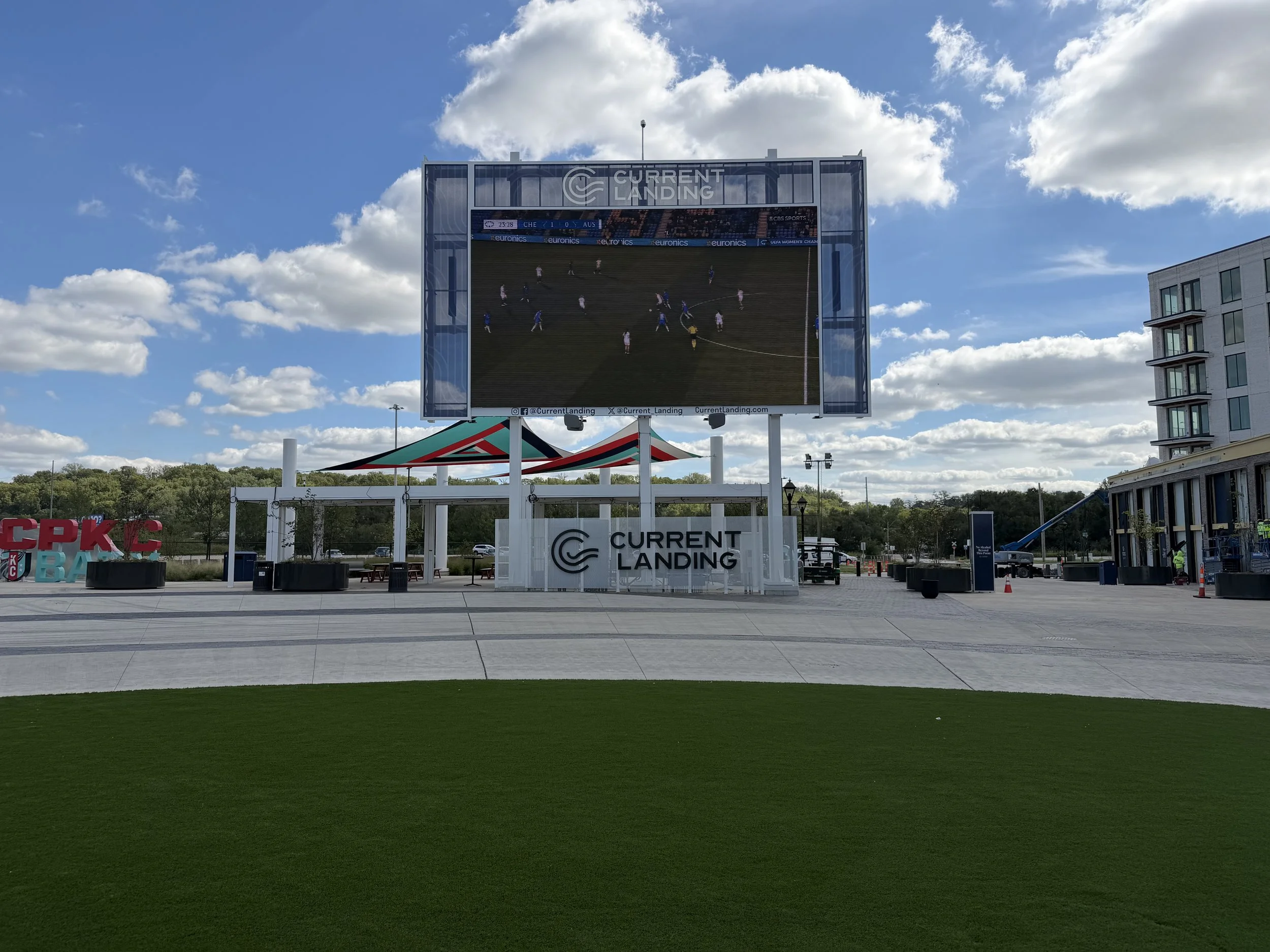
Anchored by CPKC Stadium, Current Landing is being developed as a walkable waterfront district with residences, restaurants, gathering spaces, trails, and connections to the riverfront. The idea is bigger than the stadium: sport, daily life, culture, and community existing alongside one another year-round.
That’s the principle I think more American sports venues should embrace: the stadium should be part of the city rather than isolated from it.
A stadium can be surrounded by housing, restaurants, public spaces, trails, and transportation so the area has a purpose beyond the few hours when a game is being played.
And I think that’s an important shift in how we talk about these projects.
When a new stadium or district is still being planned, it’s easy to focus on what’s being replaced, how much construction will disrupt things, or the immediate question of where everyone is going to park.
But those questions are about the construction project.
The bigger question is what the place becomes when it’s finished.
That’s the difference between building a stadium and building a place.
And that distinction matters.
A sports venue shouldn’t just be somewhere people go when there’s a game. It can help create a neighborhood that people want to visit, spend time in, and move through even when there isn’t a match happening.
That’s a very different way of thinking about what a stadium can be.
Arsenal gave me a very tangible example of something I’ve already believed about cities.
Kansas City is giving me several local examples of how that principle can work here, too.
Movement is the common thread
The more I watched football, the more I noticed how much movement is happening constantly.
Players walk.
They jog.
They sprint.
They accelerate.
They stop.
They change direction.
They reposition.
They make runs.
They recover.
They do it over and over again for 90 minutes plus stoppage time.
And that connected directly to what I want from my own fitness.
I don’t want to simply be strong.
I want to be able to move.
I want to be lean, athletic, and capable.
That’s one reason the footballer physique resonates with me.
It’s not necessarily about having the biggest muscles.
It’s about having a body that can do things.
And then I started thinking about how similar that idea is to what I like about cities.
I want people to be able to move through cities too.
Walk.
Bike.
Take transit.
Stop somewhere.
Meet somebody.
Grab a coffee.
Go to a match.
Go home.
Movement is the common thread.
Even MLS fits into this
I’ve also started paying more attention to Sporting Kansas City and the Kansas City Current.
I still enjoy the Premier League a little more right now because I’m deeper into it, but I’m not dismissing MLS.
In fact, the changes coming to the MLS calendar are another interesting piece of the puzzle.
MLS is moving toward a summer-to-spring calendar, with 2027 serving as a transition season before the first full summer-to-spring season begins in July 2027 and runs through May 2028.
That potentially creates some interesting opportunities for the league to fit more naturally into the broader global football calendar and international competitions.
I’m curious to see how that develops.
Not because I think MLS needs to become the Premier League.
It doesn’t.
I think it can develop its own identity while still becoming more connected to the global football ecosystem.
And that’s something I’m interested in watching.
Football changed how I think about sports
The funny thing is, I started this because I thought I was trying to find another sport to watch.
I wasn’t.
I was really trying to understand another way of looking at movement.
Movement on the pitch.
Movement through a city.
Movement through my own day.
And that fits perfectly with something I’ve been trying to do in other areas of my life.
I’ve been calling it Day One, Not One Day.
Stop saying I’ll do something someday.
Start doing it.
That applies to fitness.
It applies to writing.
It applies to learning.
And apparently, it applies to finally figuring out football after six years of saying I should probably watch more of it.
The World Cup finally gave me the push to start.
Then the rabbit holes did the rest.
Now I find myself learning about clubs, players, managers, stadiums, transportation systems, league structures, transfers, football history, fitness, cities, and even how I want to spend my time.
And that’s probably the biggest reason football finally clicked for me.
It isn’t just another sport competing for space on my television.
It connects a bunch of things I’m already interested in.
Fitness.
Movement.
Urbanism.
Transportation.
History.
Culture.
Travel.
Time.
Learning.
And maybe that’s why I’ve finally stopped thinking of it as just soccer.
I’m learning to see it as football—a global sport and ecosystem that happens to have a really interesting game in the middle of it.
And somewhere along the way, I realized I wasn’t just watching the game anymore.
I was starting to understand it.
It’s safe to say that this other football is now part of my sports arsenal for the foreseeable future -pun intended. I guess you can call me a global football supporter and an American football fan—but one of them has definitely grabbed my attention a little more.
The buildup was the action.
Thanks for reading The Deep Dive!
What do you think?
Have a thought about this Deep Dive? I'd love to hear it.
Email me at thedeepdive@touchesoftech.com and let me know what you think—or send along an idea for something you'd like to see explored in a future Deep Dive.
I can't promise I'll write about every suggestion, but I'm always interested in hearing what you're curious about.