

Your Social Media Doesn’t Have to Be Private—But It Should Be Intentional
Claim your digital identity, protect your personal information, and learn to use social media on your terms.
Your Social Media Doesn’t Have to Be Private—But It Should Be Intentional
You don’t have to become an influencer or post constantly on every platform. But in 2026, basic social-media literacy is becoming part of basic digital literacy.
You should understand the major platforms, claim your identity on them, and know enough about their privacy and audience controls to make informed decisions.
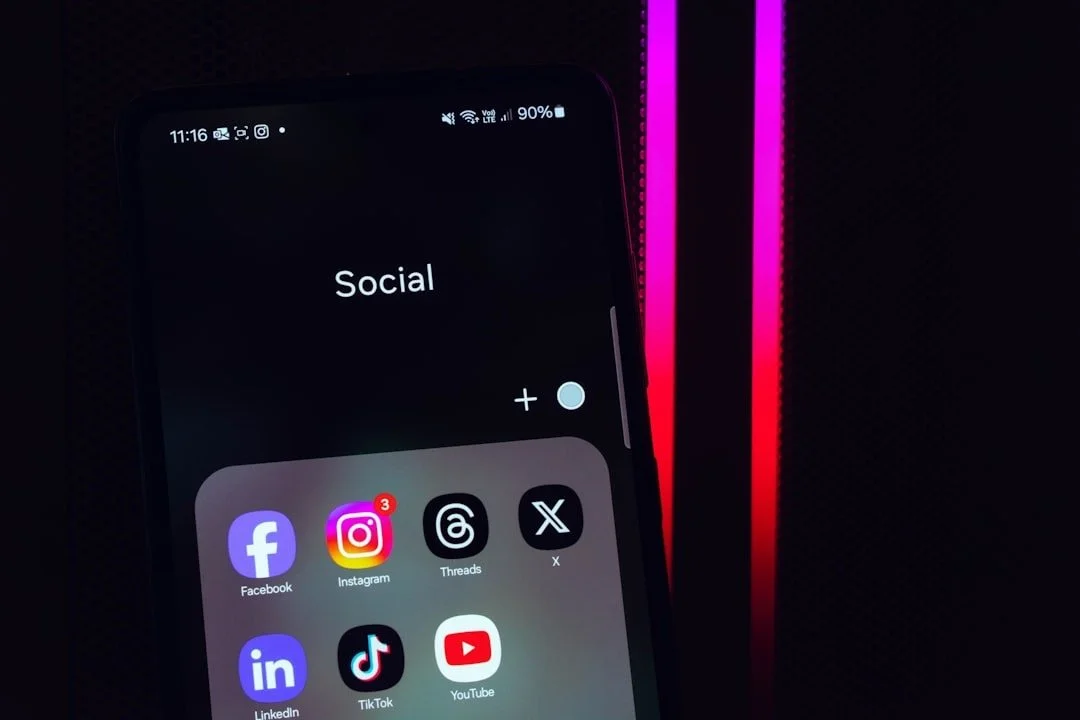
Yes, pretty much everyone should consider setting up accounts on Facebook, Instagram, Threads, WhatsApp, TikTok, X, LinkedIn, and other major platforms that make sense for them. Claim your username everywhere.
You don’t need to post on all of them regularly—or even at all. At a minimum, establish your presence. Put up a simple “Hi, I’m here” post if you want, and then decide later how much you want to use that platform.
The important thing is that you claimed your digital real estate.
You never know what platform you may eventually need for personal, professional, or business reasons. You also don’t know which platform the person you’re trying to connect with prefers.
Keep your profile and bio reasonably consistent across your platforms. Someone should be able to find you on Instagram, Threads, Facebook, TikTok, or X and recognize that they’re looking at the same person.
Your Profile Picture Should Be You
Your profile photo should generally be a picture of you.
Not your dog. Not your cat. Not your significant other. Not your child. Not a sports logo. Not a picture of you from 15 years ago.
Your profile picture is your digital face. Its primary purpose is identification.
If someone meets you in real life and later searches for you online, you want them to be able to say, “Yep, that’s the person I just met.”
Ideally, keep your profile photo reasonably current—roughly within the past year or so. You don’t have to replace it on a strict 12-month schedule, but if your appearance has changed significantly, update it.
You’ve aged. Maybe you’ve gained or lost weight. Maybe you have a new hairstyle, beard, glasses, or something else that changes your appearance. Your profile photo should still look like you.
This is especially important on Facebook, where people may be sending friend requests or following you based on your real-world relationship with them.
Facebook also gives you a cover photo, and that’s where you can show more of your life. Put your significant other, family, kids, dog, favorite sports team, vacation scenery, hobby, or something else important to you there.
Your profile picture identifies you. Your cover photo can tell your story.
If you’re using several Meta platforms, Meta also makes it relatively easy to keep your profile picture consistent across connected accounts instead of updating every one individually.
Don’t Give Away the Answers to Your Security Questions
Go through your Facebook and other social-media profiles and look at exactly what you’re making available.
Your phone number doesn’t need to be sitting there publicly.
Your home address definitely doesn’t need to be there.
Your birth year is another piece of information I’d keep private. If you choose to display your birthday, consider limiting the audience rather than making the full date publicly visible.
Maybe you’re comfortable showing the high school you attended. That’s fine. But you probably don’t need to advertise the exact year you graduated.
The problem isn’t necessarily any one piece of information.
The problem is the complete picture.
Your mother’s maiden name. Your spouse or partner’s name. Your children’s names. Your best friend’s name. Your pet’s name. Your hometown. Your school. Your birthday. Your employer. Your phone number.
Individually, these things may seem harmless.
Put them all together, however, and you’re giving someone a surprising amount of information that could potentially be used for social engineering.
Someone doesn’t always have to “hack” their way into an account. Sometimes they simply gather enough information to make themselves sound convincing when dealing with a customer-service representative, an email provider, a social-media company, or another service you use.
Every individual piece of information may seem harmless. The danger is the complete picture.
So take a few minutes to look at your profile the way a stranger would.
Facebook’s “View As” feature and similar privacy tools on other platforms can help you see what people who aren’t your friends or followers can actually see.
Stop Treating Facebook Like It’s Google Photos or iCloud
Your social-media accounts are not your personal photo library.
Your iCloud Photos, Google Photos, phone, computer, or other backup system can hold thousands of personal memories.
Social media doesn’t need to.
Keep a curated selection of your favorite pictures and videos. A good profile picture. Maybe a good headshot. A few recent pictures of yourself. A few memories with family or friends.
But do you really need 200 pictures sitting on your Facebook profile?
Probably not.
Be selective about the pictures you post of your children, family members, friends, and even yourself. It’s perfectly okay to delete old pictures after you’ve shared them and feel like they’ve had their moment.
You can post a few pictures from an event without posting every single picture you took.
And you should periodically go back through your old posts and photos. Deleting something doesn’t mean you’re hiding something. It can simply mean you’ve changed, grown, or decided that you no longer want that particular piece of your life sitting online.
We all change throughout our lives. Our social-media profiles don’t have to remain a permanent museum of every version of ourselves we’ve ever been.
Remember: Someone Else Can Save Your Pictures
Here’s where I learned this lesson personally.
On a previous Facebook profile, I had posted pictures that I thought were simply thoughtful memories to share with friends and family. At some point, someone had apparently saved enough of those pictures to create an entire calendar out of them.
I wouldn’t necessarily say the person had malicious intentions. But it was still a strange feeling realizing that pictures I’d posted as part of my personal life had become someone else’s collection.
Now think about that from another perspective.
Someone could save your picture and use it as the wallpaper on their phone. Their computer. Their tablet. Their smart TV. They could print it. They could make a calendar out of it. They could send it to someone else.
And you may never know.
The same applies to pictures of your children or other family members.
If you’re comfortable posting a picture of your child, that’s your decision. But remember that you’re also deciding to make a copy of that child’s image available to everyone who can see it—and potentially to people beyond that audience if someone saves or shares it.
And if you’re posting intimate or revealing pictures, tread especially carefully. If you would be devastated to see a picture outside of its intended audience, think very carefully before posting it anywhere, even on a private account.
Private doesn’t eliminate screenshots, screen recordings, downloads, or someone simply taking a picture of another screen.
That’s why my rule is simple:
Don’t post anything anywhere online that you wouldn’t be comfortable with the whole world eventually seeing.
Look at What’s in the Background
Before you post a picture, don’t just look at the person or subject you’re trying to share. Look at everything around them.
You may not realize that you’ve included information you didn’t intend to publish.
Before posting, look for things like:
Your house number
Street signs
Apartment or building numbers
Mail or packages with your address
License plates
School signs
Workplace information
Children’s school uniforms or identifying information
Other easily recognizable locations
This applies whether you’re taking a picture inside your own home, at a friend’s house, at a family gathering, or somewhere else around town.
You might think you’re simply posting a picture of your family, your new furniture, your dog, or yourself. But someone looking at the background may be able to figure out exactly where that picture was taken.
And you don’t necessarily know everyone who can eventually see that picture.
Take a second to look beyond the subject before you hit Post.
Don’t Broadcast Your Real-Time Location
There’s another rule I follow: don’t post pictures while you’re actively away from home.
If you’re on vacation, at a concert, traveling for work, or spending the weekend somewhere, enjoy it first.
You can post about it when you’re back home.
The same applies to everyday activities. You don’t necessarily need to announce in real time:
“I’m at this restaurant.”
“I’m at this event.”
“I’m out of town.”
“I’m at this hotel.”
The problem isn’t that everyone looking at your post is dangerous. The problem is that you don’t know everyone who may eventually see it, nor do you know what information someone may be able to piece together from your posts.
Real-time location sharing can tell someone that you’re not home, where you are instead, and sometimes even how long you’re likely to be gone.
That can make it unnecessarily easy for someone to show up where you are—or, in the worst case, know that your home is currently unattended.
And it isn’t just about strangers.
Maybe you have a friend of a friend following you. Maybe someone you don’t really know is in a Facebook group with you. Maybe someone you recently met has access to your Instagram Stories.
You don’t have to assume everyone has bad intentions to recognize that you don’t know everyone’s intentions.
So take the safer approach:
Take the pictures. Enjoy the experience. Come home. Then share them.
And when you do share them, you don’t need to post your entire camera roll.
A few good pictures and the story behind them are usually more than enough.
Your Account Doesn’t Have to Be Private
In 2026, I don’t necessarily think everyone needs to lock down their personal Instagram, Threads, or TikTok accounts.
I’ve tried both approaches myself—having a public personal Instagram and having a private one.
One thing that has changed is that many of these platforms give you considerably more control over who follows and interacts with you.
You can remove followers.
You can block people.
You can restrict people.
You can mute people.
You can use more selective audience controls where available.
So if you’re only posting things you’re comfortable with potentially becoming public, your account doesn’t necessarily have to be private.
Being public and being careless are two completely different things.
Social Media Can Actually Be a Good First Connection
There’s another reason I think having a public or semi-public social presence can be useful.
Let’s say you’re out somewhere and meet someone who could potentially become:
A friend
A business connection
A client
A professional contact
A potential partner
Instead of immediately handing over your personal phone number, you can exchange social-media accounts.
They can follow you or send you a message.
You can learn a little about each other before deciding how much personal information you’re comfortable sharing.
Most major social platforms now have messaging, and many also offer voice and video calling. And unlike your personal phone number, it’s generally much easier to mute, restrict, or block someone if the interaction becomes unwanted.
Your social-media account can therefore serve as a first layer of connection and discovery.
Claim Your Name Even If You Don’t Plan to Use the Platform
You may not need a particular social-media platform today.
Claim it anyway.
You don’t know where your career, business, hobbies, or personal life will take you.
And there’s another reason: your name is part of your digital real estate.
Imagine becoming well-known in your industry—or even becoming famous one day—and discovering that someone else already controls your preferred username.
Or worse, someone creates an account using your name and begins pretending to be you.
The more consistent your identity is across platforms, the easier it is for people to recognize the legitimate account.
You don’t have to become an influencer.
You don’t have to post every day.
Just make sure your name is yours.
Don’t Become the Person Who Only Knows Facebook
This is something I’ve encountered personally.
I’ve talked with people who are perfectly comfortable on Facebook but don’t understand Instagram, Threads, TikTok, X, or other platforms. Sometimes they’re dismissive of them because they don’t understand why they would need them.
And I understand that.
But I don’t think that’s a good long-term technology strategy.
You don’t have to use every platform equally.
You don’t even have to like every platform.
But you should understand how the major ones work.
Your friends may prefer one.
Your family may prefer another.
A potential client may use Instagram.
A coworker may live on Threads.
A potential partner may primarily use TikTok.
A professional contact may expect LinkedIn.
Someone else may want to communicate through WhatsApp.
Don’t get stuck knowing how to use only one tool.
Think of these platforms as tools in your digital toolbox.
You may use some more than others. That’s fine.
But you should know what the tools are capable of doing.
You Don’t Have to Create the Same Post Five Times
One of the reasons people give for not using multiple platforms is that they don’t want to maintain multiple accounts.
That’s understandable.
But modern social-media platforms make this easier.
If you have connected Meta accounts, you can use cross-posting to share content between Instagram, Facebook, and Threads where the available tools support it.
You can often create the core piece of content once and distribute it with just a few clicks.
Create once. Distribute intelligently. Customize when it matters.
That doesn’t mean every platform needs to look exactly the same.
Instagram may be more visual.
Threads may be more conversational.
TikTok is obviously much more video-focused.
X has its own style.
But you don’t necessarily need to reinvent the wheel every time you post.
If you’re maintaining a personal or business presence across multiple platforms, learn how the tools can work together.
Routinely Audit Your Social Media
This may be the most important thing you can do.
Every so often, go through your social-media accounts and ask yourself:
Profile
Is my profile picture current?
Is it actually me?
Is my bio accurate?
Are my links still correct?
Privacy
Is my phone number visible?
Is my address visible?
Is my birth year visible?
Am I sharing too much information about my family?
Can strangers see things I don’t intend them to see?
Photos
Do I really need hundreds of personal pictures online?
Are there old family pictures I should remove?
Are there pictures of my children that I no longer want publicly available?
Are there pictures that reveal my home, location, routine, or workplace?
Posts
Does this still represent me?
Is this information still relevant?
Have I changed my mind?
Is there something here that I wouldn’t post today?
You don’t have to delete your entire history.
But you should periodically curate your digital life.
Be Visible. Be Intentional. Be Secure.
Social media isn’t inherently good or bad.
It’s a tool.
Learn how to use it.
Claim your digital identity.
Keep your accounts current.
Understand the privacy settings.
Protect the information that shouldn’t be public.
Share selectively.
Don’t use social media as your personal photo-storage system.
And remember that privacy settings provide control, but they can’t give you complete control over what happens to something once you’ve put it online.
You don’t have to hide from social media.
You don’t have to become an influencer.
You don’t have to post your entire life.
You simply need to understand what you’re doing.
Be visible. Be intentional. Be secure.
That’s what good digital literacy looks like in 2026.
Enjoyed this article?
Follow Touches of Tech on Substack for more technology articles delivered directly to your inbox.
For Ray's thoughts on technology, business, life, food, fitness, travel, and everything in between, check out The Deep Dive on Substack.